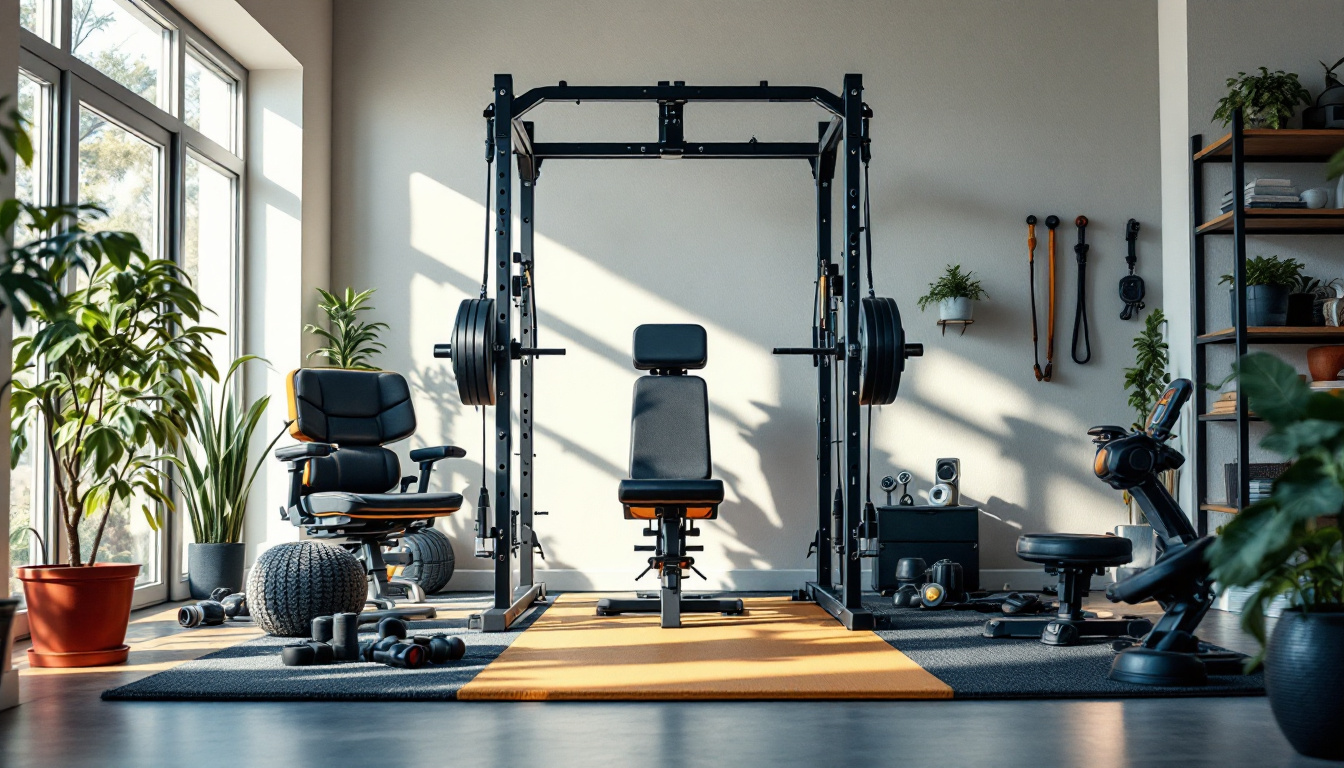
Home Fitness PPC
agency
The home fitness market surged in demand and remains elevated — buyers who discovered the convenience of home workouts are actively looking to upgrade their setups, expand their equipment, and invest in structured fitness experiences at home. That sustained interest creates strong search volume, but also a competitive advertising landscape where generic campaigns burn budget on aspirational browsers rather than committed buyers.
How We Help Home Fitness Businesses Get More from Google Ads
Your campaigns are built around the specificity of fitness intent. Someone searching for a specific type of resistance training equipment, a connected cardio machine, or a structured home workout program is not the same as someone browsing general fitness inspiration — and your campaigns treat those searches differently. Match type discipline and precise product segmentation ensure your budget reaches buyers who are ready to invest in their home gym setup, not casual browsers comparing options they'll never purchase.
Seasonality in home fitness follows clear patterns: New Year resolution surges in January, spring outdoor-to-indoor transitions, and pre-holiday gifting in Q4. Your campaigns are structured to capitalize on those peaks with pre-built audience lists, adjusted budgets, and creative that speaks to the moment. Equipment warranties, program subscriptions, and accessories create multiple entry points that your campaigns exploit with separate creative and targeting strategies.
Start with a free account audit — we'll show you exactly where your current campaigns can improve.
- PPC Audit (for eCommerce & Lead Gen)
- You send us your account. We tear it down (nicely), find the leaks, and show you exactly what’s killing your ROAS.
- Included in the audit:
- - Campaign structure, keyword targeting, ads & extensions
- - Conversion tracking review
- - Budget waste detection
- - Smart bidding & Shopping feed checks
- PPC Management That Scales
- We don’t manage Google Ads — we make them work. No interns. No automated actions. Just brutal optimization.
- What you get:
- - Weekly performance-based optimizations
- - Customised campaigns
- - Real-time reports (no BS slides)
- - Full strategy aligned with market landscape
- Conversion Tracking & Data Layer Audit
- Without clean tracking, you’re flying blind.
- We implement full-funnel tracking for businesses, including:
- - Google Tag Manager setup
- - Enhanced conversions & advanced server-side tagging
- - Custom events for lead forms, checkout steps, sales
Home Fitness PPC
growth
The core failure in home fitness PPC is intent mismatch: campaigns that serve the same ads to someone searching for "home workout ideas" and someone searching for a specific piece of training equipment. One is seeking inspiration with no purchase intent; the other is ready to buy. Generic broad match campaigns treat both searches as equivalent and waste budget accordingly.
Equipment categories in home fitness span enormous price ranges — mixing cardio, strength, flexibility, and connected fitness into a single campaign structure creates budget allocation problems where lower-ticket queries consume spend that should go toward higher-margin equipment searches. Without category-level separation, optimization algorithms optimize for click volume rather than revenue.
A properly structured home fitness campaign separates budget by equipment category (cardio, strength, flexibility, accessories), by price tier, and by purchase intent signal. Workout-inspiration and tutorial searches are excluded via negative keywords, keeping budget focused on product searches that indicate readiness to buy.
Connected fitness subscription campaigns run separately from equipment campaigns, with distinct bidding strategies that account for the different customer lifetime values involved. Remarketing audiences recapture high-intent visitors who viewed specific products but did not convert — particularly valuable for higher-ticket equipment where consideration cycles are longer. That's the difference between running Google Ads and running Home Fitness Google Ads.
Google Partner Agency
We're a certified Google Partner Agency, which means we don’t guess — we optimize with Google’s full toolkit and insider support.
Your campaigns get pro-level execution, backed by real expertise (not theory).

Our Partnership



Generation


Why PPC Works for Home Fitness Businesses
PPC campaign Audit & Setup
Ongoing PPC Management
Conversion Rate Optimization
Your home fitness campaigns are structured by equipment category, price tier, and purchase signal. Cardio, strength, flexibility, and connected fitness each have their own campaign structure, ensuring budget is allocated based on category-level margin rather than blended averages. Negative keywords eliminate workout tutorial searches, general fitness inspiration queries, and gym membership comparisons from your product campaigns.
Match type management maintains a tight focus on product-intent searches: phrase and exact match for high-value equipment terms, with broader match used only in controlled discovery campaigns with separate budgets. As conversion history builds by category, bidding algorithms are guided to favor the product types with the strongest revenue-per-click history.
Your campaign structure ensures your budget goes toward buyers who are ready to invest in their home gym — not browsers saving ideas for later.
Home fitness purchasing follows predictable behavioral patterns: January buying surges from resolution-motivated shoppers, pre-summer cardio equipment spikes, and Q4 gifting waves. Your bid adjustments and budget allocations shift ahead of those windows, not reactively. Device strategy accounts for mobile's strong role in initial product research versus desktop's higher conversion rates for larger equipment purchases.
Audience layering identifies previous product viewers by equipment category, enabling targeted re-engagement for buyers who considered a specific item but did not purchase. Geographic targeting focuses spend on markets where home ownership rates and household income levels support higher-ticket equipment purchases.
Your targeting strategy reaches motivated buyers at the moment their fitness commitment translates into a purchase decision.
Conversion tracking in home fitness captures the complete purchase funnel: product page depth, equipment comparison views, add-to-cart events, and completed purchases. For subscription-based fitness products, initial sign-up and trial conversion events are both tracked, allowing campaigns to optimize toward the actions most predictive of long-term customer value.
ROAS is tracked separately by equipment category, ensuring cardio campaigns are evaluated against cardio margins and strength equipment against its own margin structure. Secondary conversion events — email capture, program enrollment, accessory add-ons — are tracked to give campaigns the signal richness needed for accurate lifetime value optimization.
Your conversion data tells campaigns exactly what a high-value buyer looks like — and finds more of them over time.
What Your Home Fitness PPC Campaigns Deliver
Lower Cost Per Lead
Higher Quality Leads
Your Data, Your Account
Home fitness PPC efficiency comes from separating purchase-intent searches from inspiration traffic. Broad campaigns in this vertical accumulate high click volumes driven by workout research, tutorial seekers, and gym comparison shoppers — none of whom are in the market for home equipment today. Your campaigns are built around the specific query patterns that predict actual purchase behavior.
Category-level budget separation prevents lower-ticket accessory campaigns from consuming budget that should fund higher-margin equipment campaigns. Negative keyword management removes ongoing non-converting search categories. Bid adjustments concentrate spend during the seasonally strong windows when home fitness purchase intent peaks.
Lower cost per acquisition means your marketing budget works as hard as your customers do in their home gyms.
Quality in home fitness PPC means reaching buyers whose purchase intent is real and whose budget aligns with your product range. The fitness market generates enormous search volume from people who will never make a purchase — workout inspiration seekers, gym research browsers, and fitness content consumers who have no intent to buy equipment. Your campaigns systematically exclude that traffic.
Product-specific ad groups ensure that someone searching for a specific type of training equipment sees an ad and lands on a page that matches their intent precisely. The alignment between search query, ad copy, and landing page content is a core quality driver — reducing bounce rates, increasing time-on-site, and improving the conversion signals that bidding algorithms use to find more buyers like your best customers.
Your campaigns reach buyers whose fitness goals are already decided — and who are ready to invest in making them happen at home.
Businesses that do not own their ad accounts often start from scratch when they switch agencies — losing months of conversion data, audience lists, and Quality Score history. In home fitness PPC, your equipment-category performance data, your seasonal audience lists built from resolution-season buyers, and your subscription customer conversion benchmarks are strategic assets. They belong to your business.
You keep full admin access to your Google Ads account, your product feed, your conversion tracking, and all audience segments built from your customer data. Transparent real-time reporting gives you visibility into spend, performance, and return by product category. No lock-in, no hidden management layers.
Your equipment category data, your seasonal buyer audiences, your subscription conversion benchmarks — they belong to your home fitness business, not to an agency.
Click-driven mind
with plastic-brick obsession.
We build Google Ads campaigns with the same mindset we use to build tiny brick worlds: strategy, patience, and zero tolerance for wasted pieces.
Data is our blueprint. Growth is the only acceptable outcome.

See our competitive pricing plans.
For small businesses ready to fix the basics and stop wasting budget.
What we are auditing in this plan:
$2,000-$5,000/mo
For brands serious about scaling and crushing weak competitors.
4.9 out of 5 from 670+ reviews on Fiverr.
That’s not luck — that’s performance.
Highly recommend Matteo to set up your server side tracking. He has a deep understanding of e-commerce tracking and will go above and beyond to make sure everything is set up correctly and working 100%. If you are scaling your store this set up is non-negotiable in my opinion and there isn't many people who have this much knowledge or put the effort in to get it right. Thanks again!

avorodesign.com
I can only recommend Matteo! He was very patient, professional and very knowledgeable about GA4, Consent Mode v2, and GDPR compliance. Communication was clear, and the setup was done professionally and efficiently. Highly recommend him for anyone needing reliable tracking implementation.

www.natureiki.life
Matteo shines in the realm of online professionals. His work is not only deep in data but also complemented by his proactive communication and cooperation, setting a new standard for freelancers. If you want someone who truly exceeds expectations, look no further. Highly recommended!

www.omanbeverlysmyth.com
Exceptional Service Beyond Expectations - Outstanding Service Impeccable depth, flawless delivery, and exceptional language fluency—this service exceeded all expectations. Highly recommended. Matteo truly ROCKS!!!

ium-paris.com
Top-notch, always highly value working with Matteo. An absolute Google Ads Genius. This is approximately the 8th time I have hired him and he's helped us get 6-7 ROAS. We are excited in continuing to improve our lead flow. Hire this guy if you need Google Ads help. Thanks Matteo!

www.dleeventgroup.com
I finally found the guy who can setup server side tracking and all the ecosystem properly. I definitely recommend Matteo. He is very responsive, kind and wants to dig into things. He configured GA4, Meta, Google Ads, Outbrain and google consent v2 with Cookiebot. Thanks Matteo.

inomega.fr
MB Adv delivered exceptional work with outstanding professionalism and lots of patience, taking time to see effects of changes made and not just do the work and submit it. The proactive communication and video summaries of the work completed made working with Matteo a pleasure, as he consistently went above and beyond. Highly recommended for web analytics projects! We are already working on another project.

www.withnellsensors.co.uk
Working with Matteo on my Google Ads was a game-changer. He's not just a strategist, he's a true partner. He understood my goals and tailored a campaign that perfectly reached my target audience. I'm grateful for his expertise and dedication.

dccargo.com
Home Fitness PPC Costs & Strategy Guide
How Much Does Home Fitness PPC Cost?
Home fitness PPC investment scales with your product price tier and the equipment categories you compete in. Higher-ticket cardio and connected fitness equipment markets tend to see stronger competition and higher costs per click, while accessory and niche equipment categories often offer lower-cost entry points with strong conversion rates.
The home fitness advertising landscape has matured since the pandemic-era demand surge, with more brands competing for the sustained interest that followed. Brands that succeed in this environment are not the ones with the largest budgets — they are the ones with the most precise campaign structures. Intent-matched campaigns that separate equipment categories, exclude inspiration traffic, and optimize bidding toward actual purchase events consistently deliver stronger cost-per-acquisition figures than broad approaches. Seasonal budget allocation also plays a significant role: concentrating spend during January, pre-summer, and Q4 gifting windows dramatically improves overall campaign efficiency compared to flat monthly budgets.
What Google Ads Strategy Works Best for Home Fitness?
The most effective home fitness PPC strategies combine Shopping campaigns for product discovery with tightly structured search campaigns for equipment-type and brand intent. Shopping campaigns capture buyers who are visually comparing products; search campaigns capture those who already know what category they want and are looking for the right brand or model.
Seasonal campaign layering is critical in this vertical: budget should increase ahead of January resolution season and Q4 gifting peaks, with audience lists built from previous-year converters used to re-engage past buyers with upgrade and accessory campaigns. Negative keyword expansion is ongoing — workout tutorials, general fitness content, and gym comparison searches continuously appear in query reports and must be excluded to protect budget efficiency. For subscription-based fitness products, separate campaigns with separate bidding strategies (optimizing toward trial sign-ups rather than equipment purchases) deliver significantly better results than blended approaches.
How Do You Measure Home Fitness PPC Success?
ROAS tracked by equipment category is the primary KPI for home fitness PPC — cardio, strength, flexibility, and accessories each carry different margins and should be evaluated against category-specific targets rather than blended account averages.
For subscription and connected fitness products, customer lifetime value is the metric that justifies acquisition investment — a subscriber who pays monthly for two years makes the initial paid acquisition cost look very different from the first-month lens. Secondary KPIs include product page engagement depth (a leading indicator of purchase intent for higher-ticket items where buyers spend more time researching), seasonal conversion rate benchmarks (tracked year-over-year to calibrate January and Q4 budget decisions), and new vs. returning buyer split (to measure whether campaigns are building a customer base or primarily re-engaging existing purchasers). Cart abandonment rates from paid traffic highlight checkout friction points that suppress conversion independent of campaign quality.